A careful look, every time
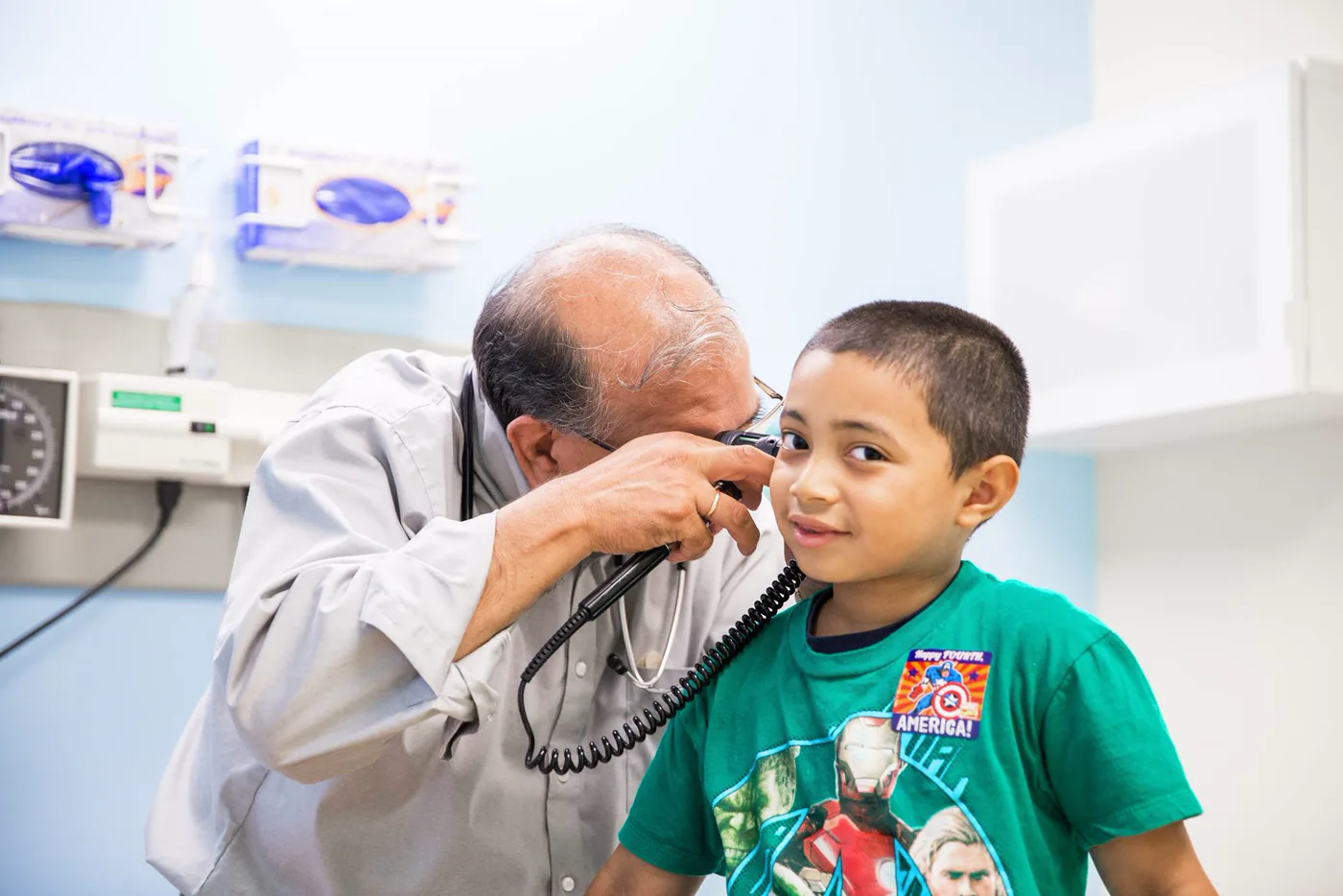
We use a pneumatic otoscope to actually see how the eardrum moves — the most accurate way to diagnose a true infection.
Services
Ear infections are one of the most common reasons kids see a pediatrician — and one of the most over-treated. We diagnose carefully (looking inside the ear, not guessing), prescribe antibiotics only when they’ll actually help, and give you a clear plan for pain relief and follow-up. Most kids feel better in 24 to 48 hours.
When to Call
We help you decide whether to come in, go to urgent care, or call 911. When in doubt, call.

What We Check
Care We Provide
We use a pneumatic otoscope to actually see how the eardrum moves — the most accurate way to diagnose a true infection.
Many ear infections clear on their own. We follow AAP guidelines: watchful waiting for some, antibiotics for others — and we explain why.
Pain relief comes first. We talk through ibuprofen or acetaminophen dosing, warm compresses, and what to expect overnight.
If symptoms don’t improve in 48 hours, call us — we may switch the plan, recheck the ear, or look at other causes.
Recurrent infections sometimes need a hearing test or referral to ENT. We track the pattern and recommend next steps when it’s time.
Kids with ear infections often feel miserable. We take extra care to make the visit calm and the exam as gentle as possible.
Come Prepared
A few small things ahead of the visit help us spend more time on your child — and less on paperwork.
FAQs
Often, no. AAP guidelines support a 48-hour watch-and-wait approach for many older children with mild symptoms — many ear infections clear on their own. We prescribe antibiotics when the diagnosis is clear, the child is very young, the pain is severe, or both ears are involved. We explain the reasoning every time.
From the outside, it’s hard to tell — that’s why we look inside. Pulling at the ear can mean infection or just teething or fatigue. Real ear infections usually come with pain (especially lying down), fever, fussiness, and sometimes drainage. If you’re unsure, call us; we can often help over the phone.
Ibuprofen (for kids over 6 months) or acetaminophen at the right dose for your child’s weight is the mainstay. A warm compress on the ear can help. Sleeping with the head slightly elevated may reduce pressure. Avoid putting anything in the ear unless we tell you to.
Pain usually improves within 24 to 48 hours, with or without antibiotics. Fluid behind the eardrum can take weeks to fully clear, even after the infection is gone — that’s normal and doesn’t need more treatment unless it affects hearing.
Recurrent ear infections (3 or more in 6 months, or 4 in a year) are worth a deeper look. We may recommend a hearing test, a referral to ENT to discuss ear tubes, or a check on allergies and reflux. We’ll talk through the options and what makes sense for your child.
A single ear infection rarely causes lasting problems. But repeated infections that leave fluid behind the eardrum for months can muffle hearing, which can slow speech development in young children. We monitor this at well visits and don’t hesitate to refer when it matters.
Related care
Easy to find, with ample parking and a calm waiting area for families.
A provider is on call 24 hours a day, every day of the year.